
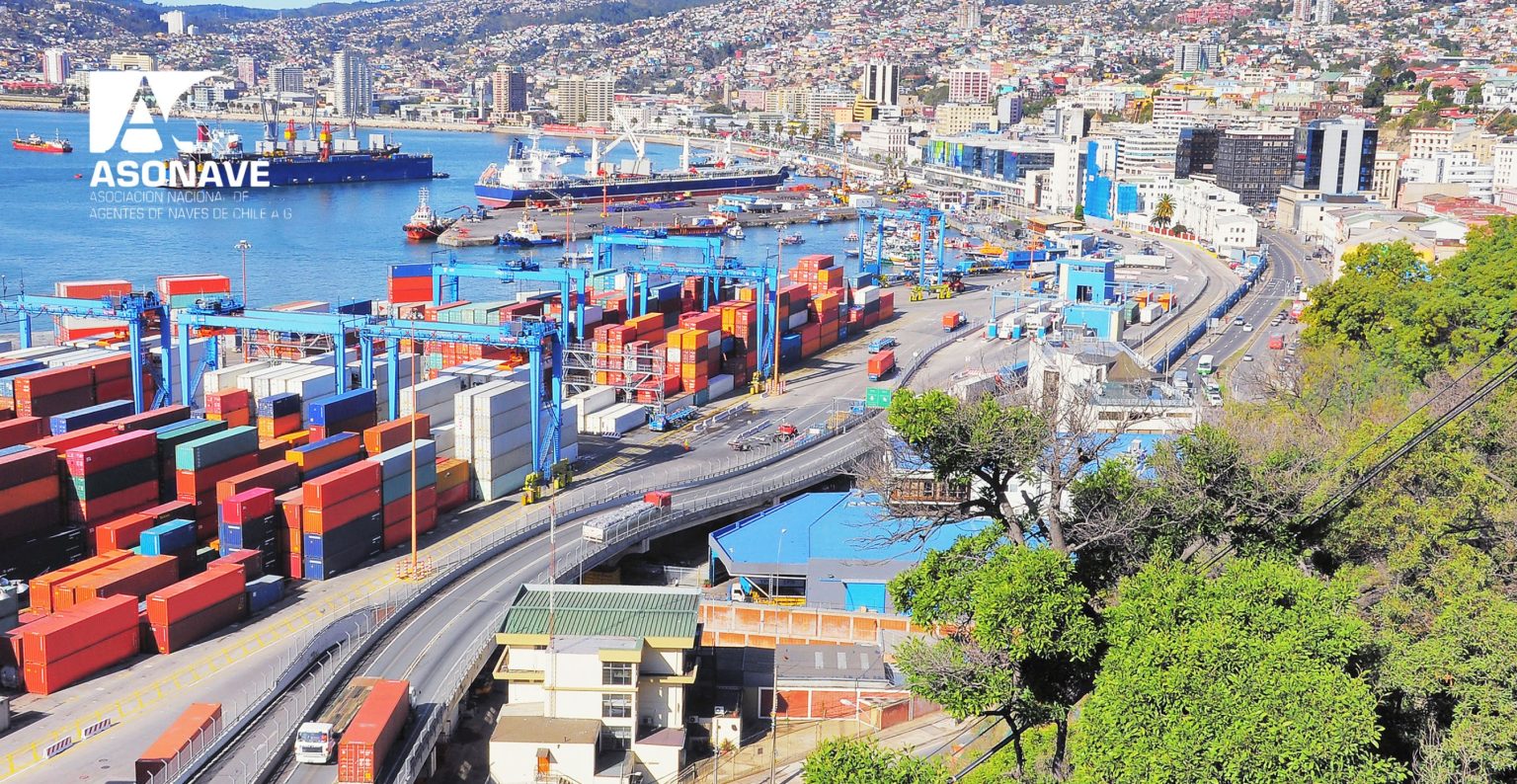
Presidente del gremio, llamó a EPV a abrir un diálogo anticipado con los actores del sistema logístico-portuario para disipar incertidumbres y asegurar una transición exitosa del Terminal Dos.
La Asociación Nacional de Agentes de Naves de Chile (ASONAVE) espera que la concesión de transición para el Terminal Dos (T2), anunciada por la Empresa Portuaria de Valparaíso (EPV), se traduzca en mayores niveles de eficiencia operativa y tarifas más competitivas para los armadores y operadores que utilizan el sistema portuario.
El presidente de ASONAVE, Gonzalo Fernández, señaló que “como gremio, valoramos toda medida que apunte a dar continuidad operativa al puerto. Sin embargo, esperamos que esta transición no signifique un retroceso para Valparaíso, y que venga acompañada de mejoras concretas en eficiencia, costos y atención”.
Desde la asociación destacan que será clave mantener muelles multipropósito abiertos y con inversiones sostenidas en infraestructura, de forma que se garantice la capacidad de atención a todo tipo de naves, no solo a aquellas vinculadas al sistema de contenedores.
“El sistema debe seguir siendo capaz de recibir cargas masivas, proyectos especiales y naves tipo TRAMP (naves no regulares de cargas masivas), cuya presencia es vital para la diversidad y dinamismo del comercio marítimo nacional e internacional”, añadió Fernández.
En esa línea, ASONAVE manifestó su preocupación que una nueva concesión podría desalentar el interés de operadores, dificultar inversiones mínimas necesarias, e incluso derivar en alzas tarifarias que terminen afectando a toda la cadena logística. “El riesgo más grave es que simplemente no haya interesados, o que se trasladen los costos a los usuarios con alzas en las tarifas actuales”, advirtió.
Frente a este escenario, Fernández sostuvo que “será necesario que EPV entregue mayores garantías de continuidad operativa, tarifaria y estabilidad a quienes representamos a los armadores y operadores, asegurando que el actual escenario logístico-portuario no sufra alteraciones mientras se define la licitación de largo plazo prevista para 2030”.
“Necesitamos se disipen estas aprehensiones de manera anticipada. Esta etapa debe construirse con participación de todos los actores del ecosistema, pensando en el bien del sistema portuario y del país”, concluyó el presidente de ASONAVE.
_____________________________________________
ASONAVE calls for efficiency and competitive tariffs in the transitional concession for T2
President of the association urges EPV to initiate early dialogue with port-logistics stakeholders to dispel uncertainties and ensure a successful transition for Terminal Two.
The National Association of Ship Agents of Chile (ASONAVE) expects that the transitional concession for Terminal Two (T2), announced by Empresa Portuaria de Valparaíso (EPV), will lead to higher levels of operational efficiency and more competitive tariffs for shipowners and operators using the port system.
ASONAVE President, Gonzalo Fernández, stated: “As a trade association, we value all measures aimed at ensuring operational continuity at the port. However, we hope this transition does not represent a step backwards for Valparaíso, and that it is accompanied by concrete improvements in efficiency, costs and service levels.”
The association also stressed the importance of keeping multipurpose berths open, supported by sustained investment in infrastructure, to ensure the ability to serve all types of vessels, not just those associated with the container system. “The port system must remain capable of handling bulk cargo, project shipments and TRAMP vessels (non-scheduled bulk carriers), whose presence is essential to maintaining diversity and dynamism in national and international maritime trade,” Fernández added.
In this regard, ASONAVE expressed concern that a short-term concession could discourage serious operator interest, hinder even basic infrastructure investments, and potentially lead to tariff increases affecting the entire logistics chain. “The greatest risk is that there will simply be no interested parties, or that costs will be passed on to users through higher tariffs,” warned Fernández.
In light of this, Fernández emphasised: “It will be essential for EPV to provide stronger guarantees of operational continuity, tariff stability and certainty to those of us representing shipowners and operators, ensuring that the current port-logistics landscape is not disrupted while the long-term concession, scheduled for 2030, is defined.”
“We need these con